Dendrobium Nobile Yellow Leaves: 7 Causes & How to Fix Them
By Linda · Published August 24, 2026
This guide follows American Orchid Society (AOS) care standards and Royal Horticultural Society (RHS) cultivation guidelines.
Stop scrolling Reddit. Here’s a 3-second triage for your dendrobium nobile:
- 🟢 Only the bottom 1–2 leaves are yellow, top is green? → Normal aging. Relax, do nothing.
- 🔴 Whole plant yellow + canes feel soft? → Overwatering. Stop watering now.
- 🟡 Dry yellow tips + canes look wrinkled? → Underwatering. Soak the pot.
- 🟠 Yellow spots with dark centers? → Fungal infection. Isolate and treat today.
If you searched “dendrobium nobile yellow leaves” or “why is my dendrobium turning yellow,” the rest of this guide walks you through all 7 causes — with exact fixes for each one.
1. Normal Leaf Aging
Yellow leaves at the bottom of an older dendrobium nobile are usually nothing to worry about. Like most orchids, the nobile type sheds its oldest leaves as part of its natural growth cycle, a process the American Orchid Society describes as “seasonal leaf drop common to deciduous and semi-deciduous Dendrobium species.” If the top and middle leaves stay green while only the bottom one or two turn yellow and drop, your dendrobium is healthy.
Fix: None. Simply let the old leaf fall off on its own — pulling it off early can leave an open wound.
2. Overwatering
The most common cause of yellow leaves across the whole plant is overwatering. Dendrobium nobile roots need to dry out between waterings; when the potting mix stays wet, roots rot and stop delivering water and nutrients — so leaves turn yellow and the canes feel soft.
Fix: Stop watering immediately. Lift the plant, trim any mushy brown roots with sterilized scissors, and repot in fresh, fast-draining orchid bark mix. Going forward, water only when the roots turn silvery-white — for most indoor dendrobiums, that means every 7–10 days in summer and every 2–3 weeks in winter.
3. Underwatering
The opposite problem produces a different yellow: a dry, papery yellow starting at the leaf tips, with shriveled, wrinkled canes. A thirsty dendrobium nobile sacrifices its leaves to survive.
Fix: Soak the whole pot in room-temperature water for 20–30 minutes, then let it drain completely. During the growing season (spring through early fall), check your dendrobium every 4–5 days — if the canes start to wrinkle, you’ve waited too long.
4. Sunburn / Too Much Light
Dendrobium nobile likes bright, filtered light, but direct afternoon sun scorches the leaves. Sunburn shows up as yellow or bleached patches, often with dry brown edges, on the side of the plant facing the window.
Fix: Move the plant out of direct sun — an east-facing window or behind a sheer curtain works well. Per RHS guidelines, Dendrobium nobile thrives at 2,000–4,000 foot-candles of light; anything above that without shade risks burn. New growth will come back green; burned leaves won’t recover.
5. Nutrient Deficiency
If the older leaves turn yellow first while the veins stay green, your dendrobium is likely short on nitrogen or magnesium. Dendrobium nobile is a hungry, fast-growing orchid, and a starving plant cannibalizes its old leaves.
Fix: Feed with a balanced orchid fertilizer — 20-20-20 formula at quarter strength, every other watering during the growing season. Once a month, flush the pot with plain water to prevent mineral salt buildup, which the AOS identifies as a common cause of leaf-tip dieback. See our tested fertilizer picks for specific products.
6. Fungal / Bacterial Infection
Yellow spots with black or brown centers are a red flag — that’s disease, not watering. Fungal and bacterial infections spread quickly on a dendrobium nobile, especially in high humidity with poor airflow.
Fix: Cut off the infected leaf with sterilized scissors, seal the cut with cinnamon (a natural fungicide recommended by experienced orchid growers), and improve air circulation. If spots keep spreading, apply a copper-based fungicide following the label instructions.
7. Temperature Stress
Dendrobium nobile is a cool-growing orchid, but it doesn’t like sudden change. Cold drafts or temperatures below about 50°F (10°C) turn leaves yellow and mushy; a heatwave can cause the same by evaporating water too fast.
Fix: Keep your dendrobium between 55–85°F (13–29°C), away from vents and drafty windows. Importantly, the RHS emphasizes that Dendrobium nobile requires a cool, dry winter rest (50–55°F / 10–13°C) with reduced watering to trigger spring blooming — skipping this rest period is one of the most common reasons the plant refuses to flower. Full details in how the winter rest triggers blooming.
Quick Diagnosis Chart
| Symptom | Likely cause | Fix |
|---|---|---|
| Bottom old leaves yellow, new growth green | Normal aging | Leave it alone |
| Whole plant yellow, canes feel soft | Overwatering | Stop watering, repot in fresh bark |
| Dry yellow tips, canes look wrinkled | Underwatering | Soak pot 20–30 min |
| Yellow patches + brown crispy edges | Sunburn | Move out of direct sun |
| Old leaves yellow, veins stay green | Nutrient deficiency | Fertilize with 20-20-20 |
| Yellow spots with dark centers | Fungal / bacterial | Cut, treat, air out |
| Yellow leaves after a cold snap or heatwave | Temperature stress | Stabilize at 55–85°F |
When to Worry vs. When to Relax
Relax if: only the bottom 1–2 leaves are yellowing on an otherwise green, firm dendrobium — that’s normal seasonal shedding, and your plant is healthy.
Worry — and act today — if: the yellowing spreads upward fast, the canes go soft or wrinkled, or the spots have dark centers. These mean overwatering, thirst, or disease, and they won’t fix themselves.
In short: one yellow bottom leaf is normal. A whole plant turning yellow in a week is not.
Sources
- American Orchid Society — Dendrobium Culture Sheet
- Royal Horticultural Society — Dendrobium nobile care guide
- Kew Gardens — Dendrobium nobile (Sw.)
Related Guides
- Dendrobium Nobile: Complete Species Guide
- Dendrobium Light & Temperature Guide
- How to Water Dendrobiums
- Winter Rest & Reblooming Guide
Yellow leaves on a dendrobium nobile are rarely a death sentence — most causes are watering, light, or normal aging, and all are fixable. Work through the 7 causes above, fix the one that matches your plant, and you’ll be back to healthy green growth.
FAQ
Why is my dendrobium turning yellow?
Usually overwatering, underwatering, sunburn, or simple old-leaf shedding. Check the pattern: bottom-only yellow = normal aging; whole-plant yellow with soft canes = overwatering.
Should I cut off yellow dendrobium leaves?
Only if the leaf is fully yellow or diseased. If it's still partly green, leave it — the plant is reclaiming nutrients from it. Always use sterilized scissors.
Will yellow dendrobium leaves turn green again?
No. A yellow leaf won't turn green again. What matters is stopping the cause so new leaves grow healthy.
How do I fix yellow leaves on dendrobium nobile?
Match the symptom to the cause in the diagnosis chart, fix the watering, light, or disease issue, and remove only fully yellow leaves. The plant will grow fresh green leaves.
Related Guides
Dendrobium Nobile Light & Temperature Requirements
How much light dendrobium nobile needs, the leaf-color test, temperature ranges for nobile vs phalaenopsis types, and the winter chill that triggers blooms.
How to Repot a Dendrobium Nobile Orchid: Step-by-Step Guide
How to repot a dendrobium nobile the right way — timing after flowering, one-size-up pot rule, root assessment, and aftercare. Backed by AOS guidelines.
How Often to Water Dendrobium Nobile (Seasonal Schedule)
The seasonal rhythm that keeps dendrobium nobile alive and blooming: heavy soaks in summer, a dry rest in winter. Backed by AOS guidelines.
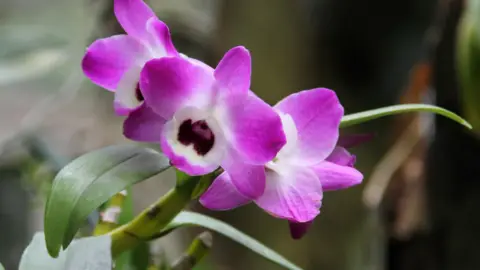
Dendrobium Nobile Not Blooming: 7 Reasons & How to Fix It
Dendrobium nobile not blooming? 9 times out of 10 it skipped its winter rest. The complete fix.